

Stories of women who have overcome hardship to build prosperity in Phu Tho Province show that when microfinance capital is appropriately designed and delivered at the right time, women in mountainous areas can fully develop their livelihoods and improve their living standards.
The Momentum of Microfinance
Ms. Phung Thi Thu (48 years old, Lien Dong Hamlet, Thanh Son Commune, Phu Tho Province) has been associated with tea cultivation for many years. In 2018, through the local Vietnam Women’s Union, she borrowed VND 30 million from Tinh Thuong One Member Limited Liability Microfinance Institution (TYM) to expand her tea production.
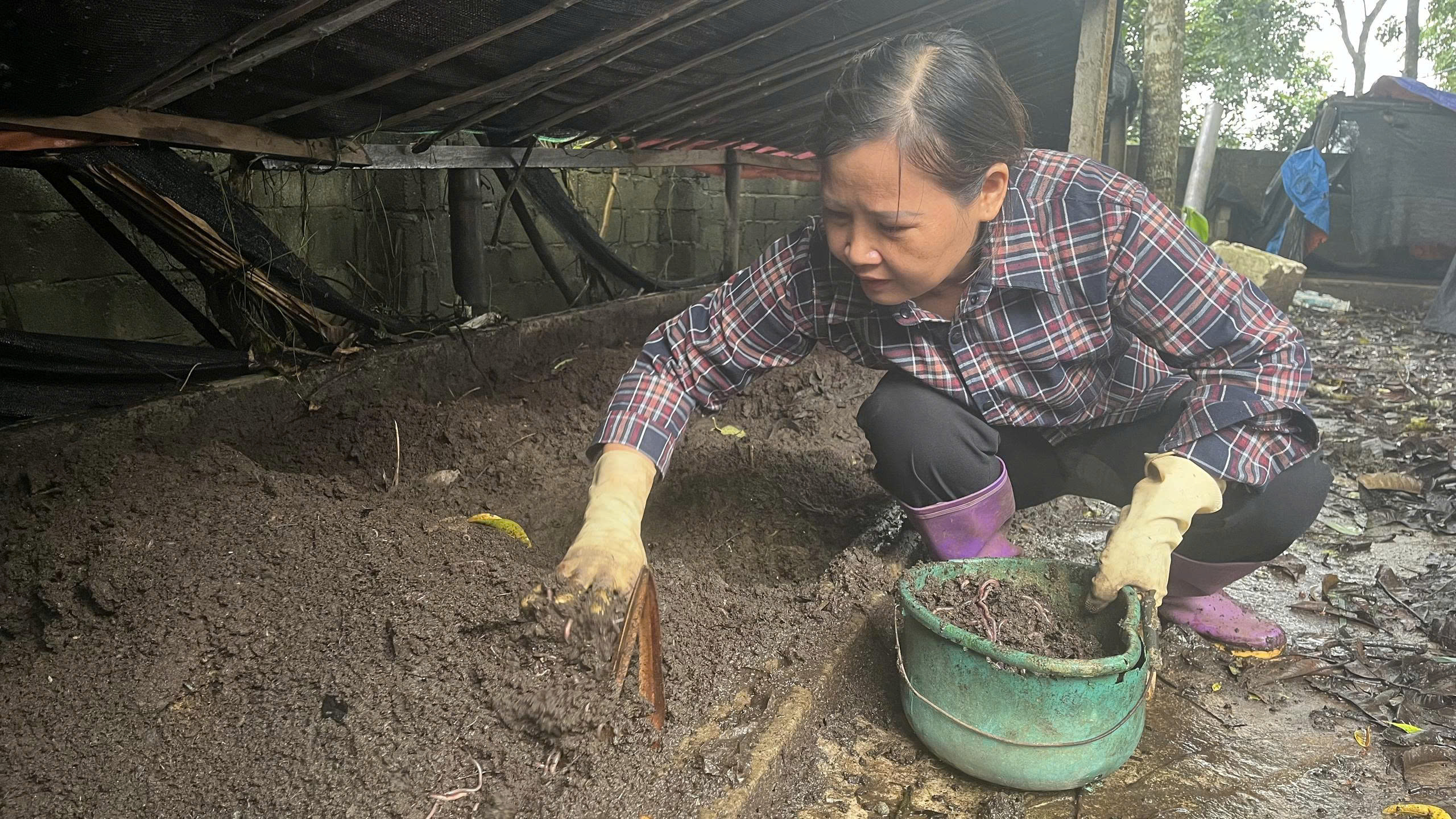
After her husband learned techniques for raising earthworms, and seeing that this model required relatively low initial investment, could utilize agricultural by-products, and had a stable market, she boldly shifted direction. From 2019 to the present, her family has regularly borrowed VND 50 million each year from TYM to expand the farming area, purchase inputs, and develop production. The earthworm farming model has not only become the family’s main source of income, but also enables them to use vermicompost to grow fruit trees, creating an efficient closed-loop production system.
Sharing her experience in accessing credit, Ms. Thu said:
“Women in my area are mostly used to farming and are not accustomed to financial calculations. When it comes to borrowing, many feel hesitant and afraid they won’t know how to repay. I was worried at first too. But after joining TYM and receiving guidance and support, I realized that if you plan carefully, use short-term gains to support long-term goals, and set aside money from sales to repay loans, there’s no pressure. What matters is rotating capital and investing in the right places. When you earn a profit, you gain motivation to continue, and the fear disappears. With each loan cycle, I grow more mature and confident.”
Ms. Nguyen Thi Hong Nhung (51 years old, Tranh Hamlet, Thanh Son Commune, Phu Tho Province) already operated a chicken farm with a scale of 1,000 chickens before learning about TYM. In 2019, she accessed a loan of VND 40 million to purchase an additional 2,000 chicks and renovate her poultry houses.
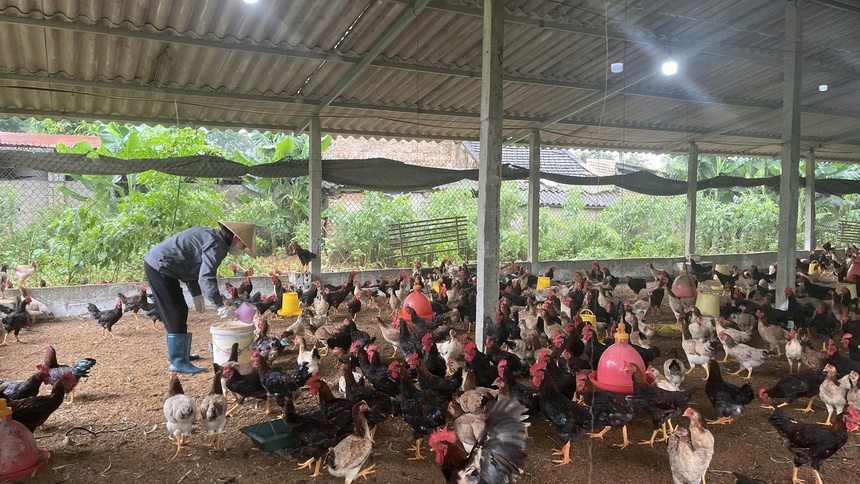
“Livestock farming involves high costs and requires constant capital rotation. I needed a stable source of funding with simple procedures. Borrowing from TYM and repaying weekly does not create pressure,” Ms. Nhung shared.
She added that TYM is an important supplementary source of capital alongside other credit channels, helping her proactively secure resources when purchasing chicks, buying feed, or improving facilities. The close accompaniment of TYM staff—from guiding procedures to understanding her actual capital needs—has helped her maintain stable production, at times reaching more than 5,000 chickens.
“I hope to continue a long-term relationship with TYM. If loan limits were higher and tenors longer, it would be very suitable for livestock households with an established foundation like my family,” she expressed.
Mountain Women Use Loans Responsibly
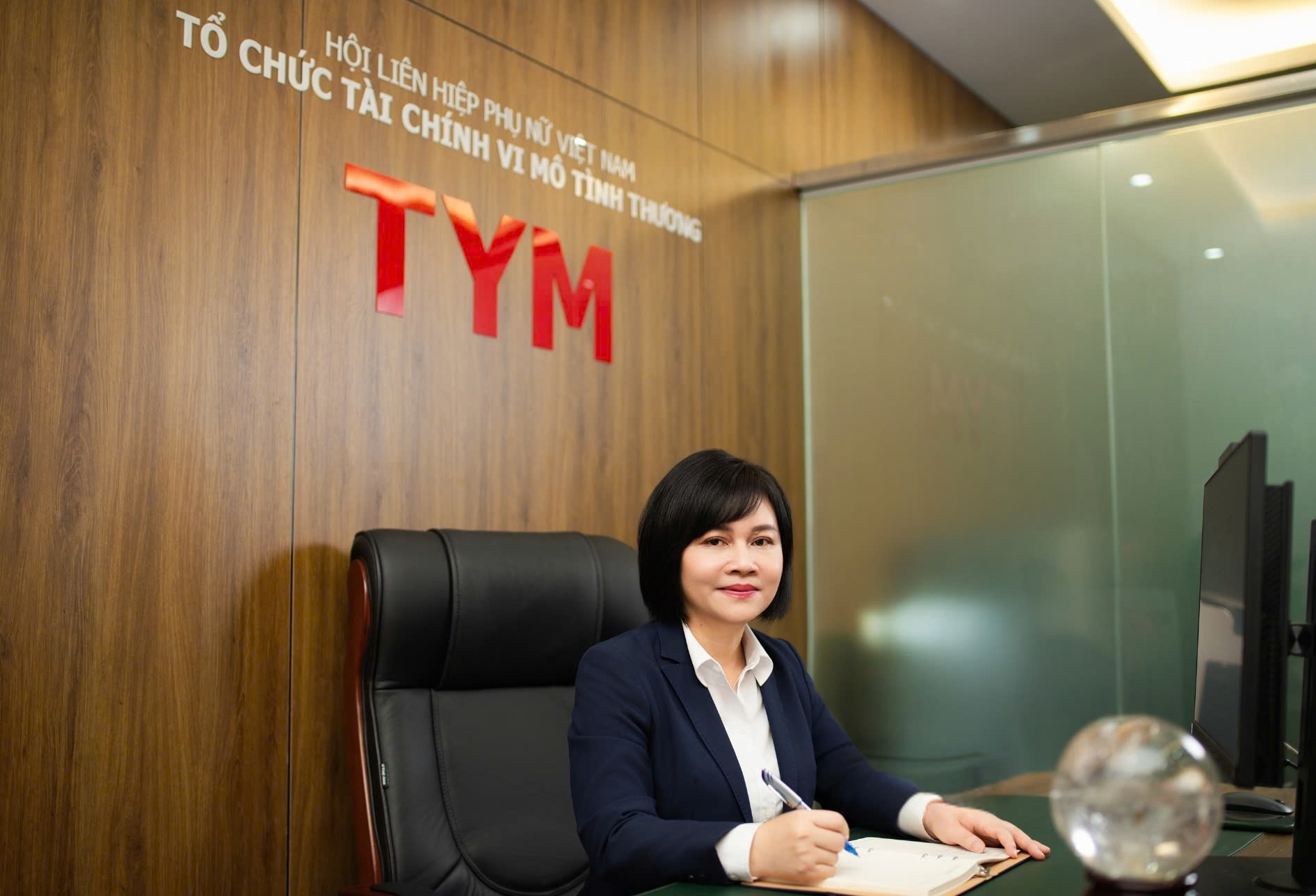
Ms. Nguyen Thi Minh Thuong, Chairperson of TYM’s Board of Directors, stated that TYM is currently implementing a wide range of loan products in mountainous areas under the principle of “tailored design – steadfast accompaniment – comprehensive support.” The portfolio includes more than 10 diverse credit products, flexibly designed according to the purpose of capital use, economic models, and the actual conditions and circumstances of clients.
These loans have several outstanding features: moderate loan sizes suitable for household-scale economies; simple and accessible procedures that take regional characteristics into account; periodic repayment methods on a weekly or monthly basis to help clients manage cash flow and plan expenditures; and notably, no requirement for collateral, thereby reducing barriers to capital access for the poor. As a result, even women in remote and disadvantaged areas can access capital conveniently and safely.
Ms. Thuong emphasized:
“With more than 33 years of accompanying women on their economic development journey, we have observed that women—especially those in mountainous areas—always use loans very responsibly, developing in a ‘slow but steady’ manner. They often start with small-scale models such as livestock raising, farming, or household trading. As income gradually stabilizes, they step by step expand production, in line with real conditions and management capacity. Some clients initially borrowed only a few hundred thousand dong for small businesses, but after a few years developed into farm owners, accumulated savings, supported their children’s education, and even created jobs for relatives and neighbors. Many women have stayed with TYM for decades, becoming exemplary producers and spreading the spirit of self-reliance and resilience.”
A TYM representative also pointed out three key reasons why women in mountainous areas are able to maintain long-term borrowing relationships:
- Appropriate loan size with regular and timely disbursement aligned with actual needs;
- Accompaniment and support not only in loans but also in knowledge, skills, and confidence;
- Clients feel trusted, empowered, and recognized—thereby forming strong motivation to improve their own lives and those of their families.
The long-term attachment and trust of clients are clear evidence of the effectiveness and sustainability of the microfinance model that TYM is implementing in mountainous regions.
Practical experiences from areas such as Phu Tho demonstrate that when microfinance is designed in close alignment with the specific conditions of each locality, it not only contributes to sustainable development and narrows regional gaps in access to finance, but also becomes an effective tool for achieving financial inclusion. In doing so, it ensures that people are “not left behind” in the process of socio-economic development, while contributing to poverty reduction, social security, and especially the prevention of illegal lending—fully in line with the major policies of the Party and the Government.